KDE Look Part 4: Fixing things with a little help from my Friends
Sure, it’s a tired and cliche phrase, but hurray for the wisdom of the crowd. I’ve received comments on identi.ca, twitter, and in the comments here with answers to nearly all my problems with KDE. Let’s see if I can get them all to work. First off, I was told that my problem with Konversation not getting my password in time to keep me from being signed into the fedora-unregistered could be solved by setting the password as a server password. Alright! That worked! woohoo! Before I’d had it set to just run the /msg identify command.
Testing Email Clients
Ever since late Fedora 12 or, for sure, Fedora 13, Evolution has been annoying me. I don’t know if it’s linked or coincidental, but it appears to have started getting buggy after I noticed it was using couchdb, a database that a lot of database people in the Linux world are getting all excited about. Evolution is the Linux equivalent to Microsoft Office Outlook. I switched to it a few years ago so that I could have tasks, email, and calenders in one spot. In theory, it’s perfect - it syncs with Hotmail, Gmail, and Google Calendar. I have all my todo items in there out to April of next year. It supports GPG signing and encryption via integration with Gnome’s Seahorse keyring. In practice, it has started taking forever to start a new email or enter a new task. I click the button and then have to wait for a long time until the dialog pops up; if it pops up. A lot of the time doing this causes the program to crash. I’ve filed a bug via the auto-bug-filing program in Fedora. There’s also a bug that doesn’t bother me as much where it keeps asking me to supply the password for my Hotmail account and not accepting it until the next time I restart the program. So I decided that I’d wait and see if things improved with Gnome 2.32, included in Fedora 14.
KDE 4 Look Part 3: A Week of KDE 4.5
So I’ve used KDE for about a work week. During that time I’ve pretty much gone to using the KDE versions of all my programs except Konqueror. I’m not sure if the Fedora 14 version of Konqueror is the one with Webkit, but last time I used Konqueror with KHTML it was mucking up a bunch of web pages including my blog. So I stuck with Google Chrome, which is what i use on Gnome, LXDE (Lubuntu on my laptop), and on my Windows 7 install. (Also, I stuck with gPodder for podcasts because that’s working perfectly) So how did it go? First of all, I love the stock screenshot tool in KDE, KSnapshot. I love that lets me choose full screen, region, window under cursor, and section of Window. With Gnome I hit print screen and then I have to edit the png in the GIMP. So it gives me less work for my Linux-related blogging.
The State of Desktop Search on Linux
Desktop search is one of those techs that keeps coming back and never really sticking. At least that’s how it seems to me. Look at how giddy I was about Beagle back in 2006. And I tried it and it was, generally, pretty awesome. It really worked well. It was like the speed of locate without having to wait until the database was updated at midnight. And it could see into IMs, MP3 metadata, emails and office documents. Now? According the the official website it’s no longer under active development. Perhaps that’s because they met all their goals. And that’s fine, but pretty much everyone switched over to tracker around 2008. I’m not quite sure why - perhaps all the anti-Mono hatred that went on. Fedora doesn’t even ship with Tomboy or F-Spot anymore. They’re there in the repos, but they aren’t the defaults.
KDE 4 Look Part 2: Amarok 2.3.2 in KDE 4.5 and Fedora 14
[caption id=“attachment_3901” align=“aligncenter” width=“290” caption=“Amarok 2.5.2”] 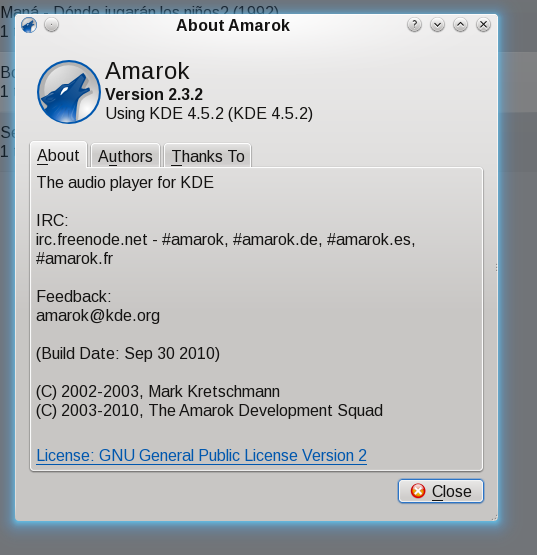 [/caption]
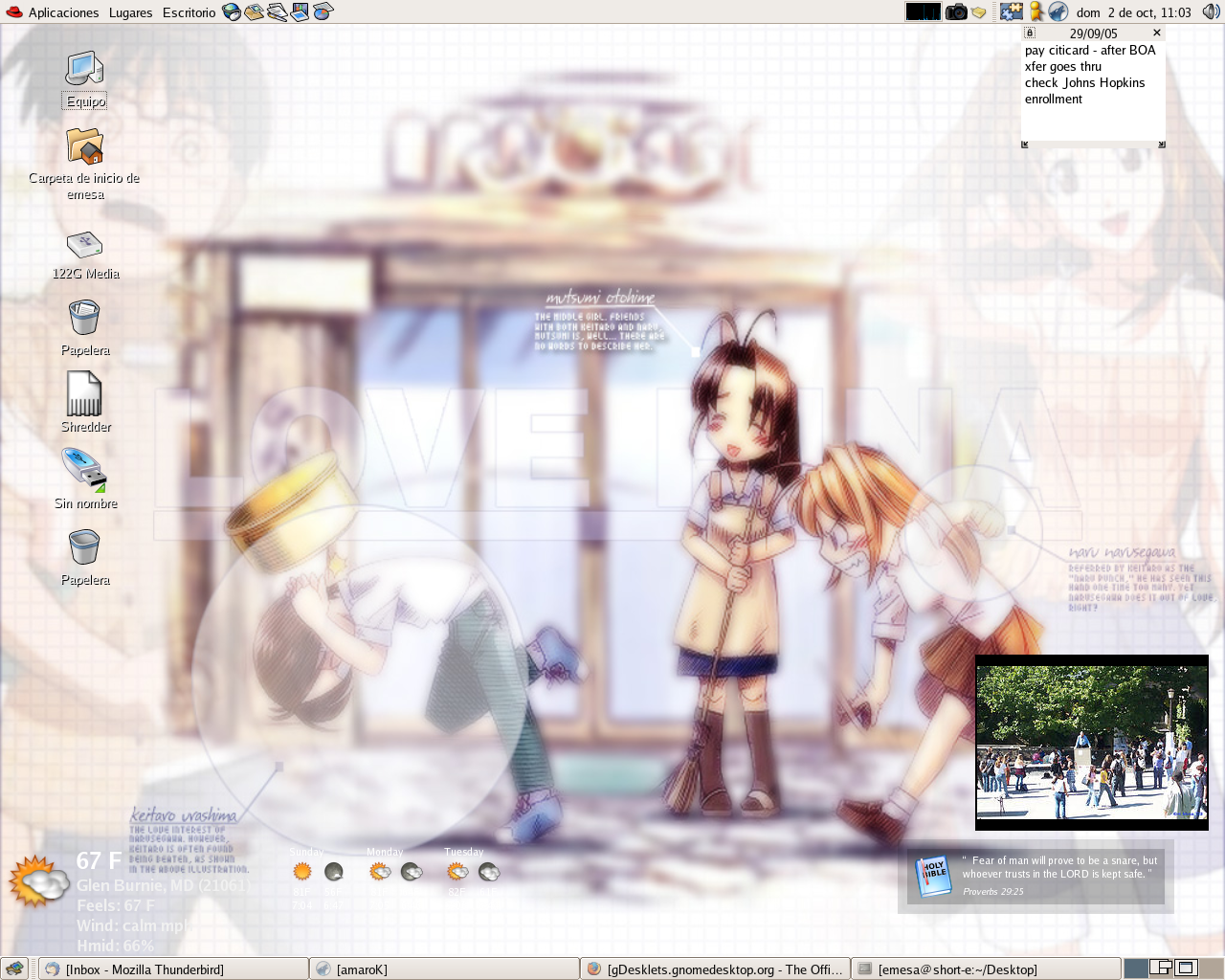
There was a time when I thought Amarok was the best music player on Linux. I even used to run it in Gnome as you can see from this 2005 screenshot. In that first link you can read me gushing over Amarok 1.4. I loved all the integrated technologies, especially the metadata juggling Amarok did. The first few Amarok 2.x releases with the KDE 4 libraries were complete crap. They were ugly and were missing nearly all of Amarok’s features. (Mirroring the complaints people were having about KDE 4 at the time) When I took a look at Amarok and KDE 4.4 in October I said I would take another look at Amarok.
Quitting the Nanowrimo
I love to write so when I started the 2010 NanoWrimo competition 9 days late I thought it would be no big deal to get caught up. I really under-estimated the effort behind writing over two thousand words a day. I think I probably could have made it if I had an idea ahead of time, but I ran out of steam somewhere around 15 thousand words. I’m nearly at 18 thousand and nearly everything I’ve written has been complete and utter crap. Being very trope savvy has made it hard for me to just make stuff up as I go along because I’ve been trying to avoid plot and logic holes.
Quick update on my upgrade to Fedora 14
The Gnome panel was acting a little buggy and I was going to report that, but I decided that instead I could load up KDE. I’d been wanting to check it out a little more ever since I took a look in October. But I was unable to open Kontact because akonadi was being annoying. Turns out that the version of akonadi I had installed from Fedora 13 was technically a higher version than the one with Fedora 14. I ran most of the commands on this page after getting the link as advice from fenris in the Fedora freenode IRC room. The most important one was the ??yum distribution-synchronization which fixed that akonadi problem. Kontact now loads up. It’s acting a bit funny with my gmail messages, but I’m sure that can be fixed. So I’m going to have to get back into Gnome to see if the panels are behaving a bit better now. After all, I ended up installing about half a gig of updates tonight as a result of the instructions on that page. This is why, folks, everyone always recommends just going for a fresh install. Upgrades always require a bit more work.
Upgraded to Fedora 14
I just did a preupgrade upgrade from Fedora 13 to Fedora 14. The only hitch is that it didn’t find enough space to download the installer ahead of time so that had to be downloaded after the the reboot. Everything went off without a hitch. My absolute cleanest upgrade ever. Dual screen worked, nothing had to be uninstalled. None of the repos had to be disabled. All my usual programs work. I haven’t tried Blender yet, that’s tomorrow. The first thing I noticed was that the OpenOffice.org icons have changed again. This is the third time, I think,since I’ve been using Linux.
Thoughts on Death
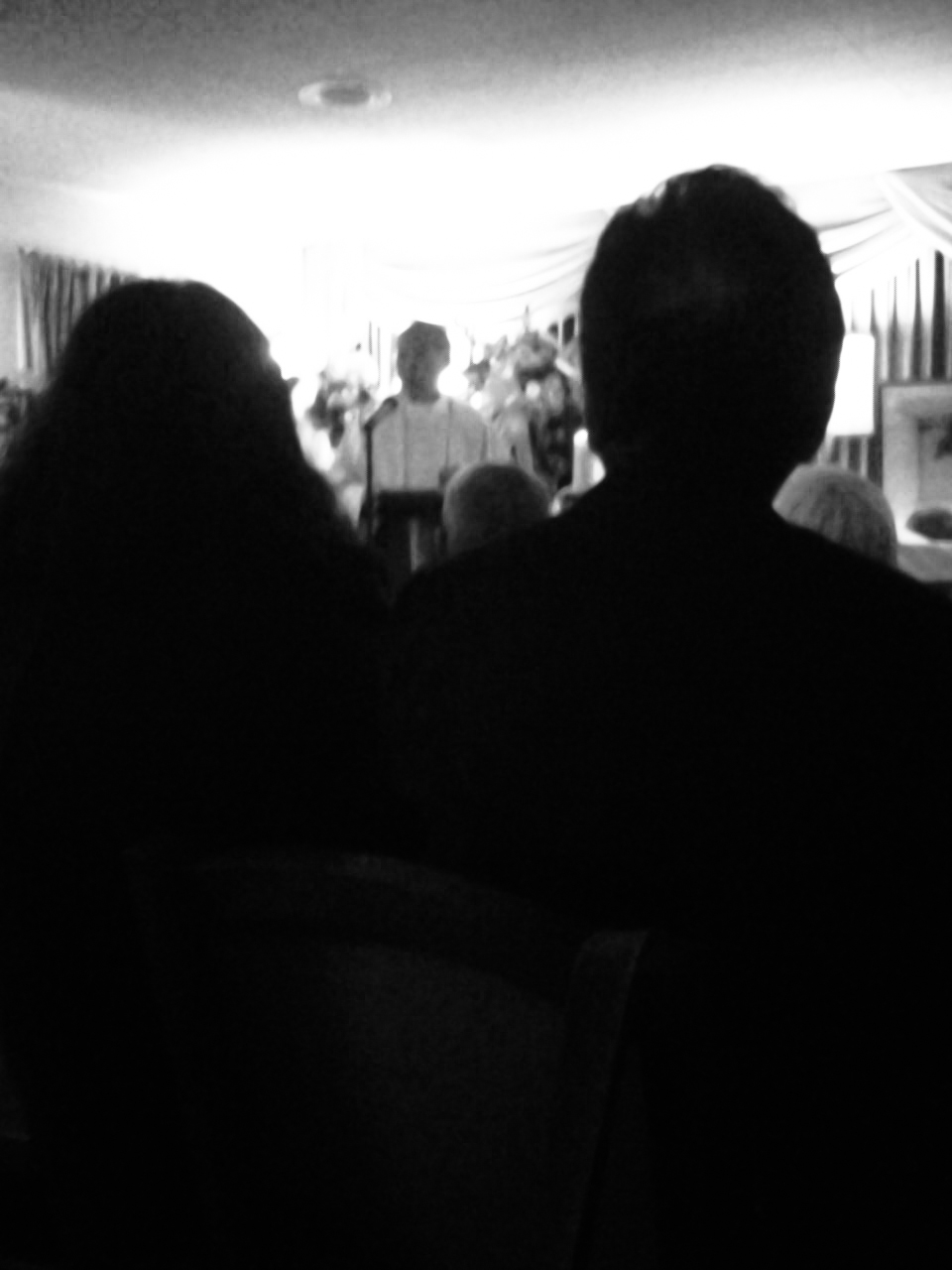
Today I went to the funeral of my wife’s uncle. It was a Catholic Mass, so it was pretty interesting trying to match up the Vietnamese with what I knew from English mass. It was also interesting to hear how the priest pronounced “amen” and “hallelujah”. So far in my life I’ve been to two Cuban funerals and one Vietnamese funeral. One of the Cuban funerals was a masonic funeral. The other was Protestant. Really the only difference in my limited experience is that the Vietnamese take photos and video to document the event.