The XZ Utils Backdoor has (finally?) penetrated the non-tech press
Those of us who are deep in the tech world remember about 6 weeks ago when all our social media and news feeds were talking about the XZ Utils backdoor. ( Here’s a great writeup from my favorite tech site, Ars Technica)
Really quick, bulleted recap:
- XZ Utils is a really awesome compression format. (In fact, earlier this month I got some Linux image files to run off an SD card that were compressed in xz
- SSH uses XZ Utils
- Only one guy was effectively maintaining it
- Someone or some group pretending to be one person social engineered the maintainer to giving them commit access
- they used that to put some backdoors
- Because it’s in SSH it would have made every computer on the net vulnerable
- LUCKILY it was found (by accident - see the Ars Technica story) before it made it out of most (all?) Linux distro test repositories
I was incredibly surprised to hear about it today on Planet Money’s episode: The hack that almost broke the Internet. It’s a really great episode to share with your non-techie friends who want to understand what you were stressed about and which it matters to everyone, not just techies. Of all the Linux distros, they start off interviewing someone from Red Hat! (My favorite Linux distro family) The episode then goes back to the 1980s to explain the origins of open source (not FLOSS, there’s no rms here - it’s Bruce Perens they interview) before bringing it back to the present and explaining the how the social engineering attack happened and what it affected. (Also a quick moment that explained how MS went from hating OSS to supporting it) I thought it was an incredibly well-produced episode that brings everything into context for those who aren’t neck-deep in Linux and/or open source. Give it a listen and pass it along!
A Couple Windows 10 Upgrade Gotchas
- I “lost” my optical drives. I had to mess with a registry key to get them back.
- Here’s one I didn’t realize until I went to play Civ 5 and my saves were all gone. Because I have my main OS on a small SSD (and originally had my games on a regular hard drive - now they’re on their own bigger SSD), I had My Docs and My Pictures pointing to another drive. The Windows 10 upgrade lost those settings. I had to open up Windows Explorer and right click on each of those and change the location on the location tab.
A Quick Review: Windows 7
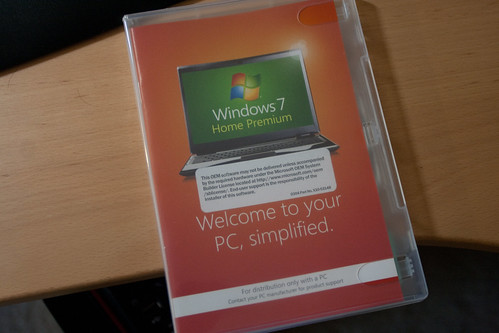
This is the first time in nearly 10 years that I’m moving to a new version of WIndows. I pop the CD in and boot up. I see a text screen as Windows “loads files”.
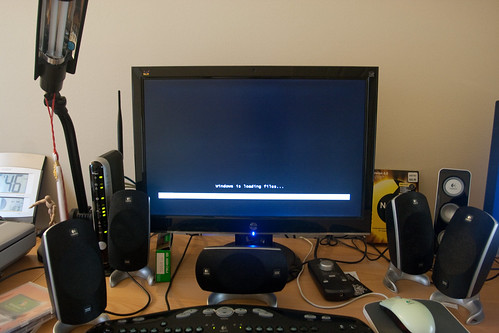
Nothing here different from a Linux distro. Then the Windows logo pops up.
When Being Proprietary Makes You Do Stupid Things
Recently Microsoft screwed themselves over. We have MS Money 2006 from back when I was still getting into Linux and hadn’t convinced my wife completely about how much better it was than Windows. Recently we switched to back to a credit card where we previously used to download the transactions from within MS Money. When my wife went to do this, she was informed that MS Money only allows you to do this for two years. After that if you want to keep doing it you have to buy another copy of Money. So when she found this out, did she buy a new copy of MS Money? NO! She was extremely pissed that this important feature would expire. So she want to MoneyDance.
System Information for Windows
System Information for WIndows (SIW) is a program you MUST have installed on your Windows computer. It gives you all the information you could ever want to know about your computer in a nice easy to use interface. I learned about it in a recent Computer User Magazine. Here are some examples of the information it provides:
Motherboard:
PropertyValue
ManufacturerASUSTeK Computer Inc.
ModelP4P800-E
VersionRev 1.xx
Serial NumberMB-1234567890
North BridgeIntel i865P/PE/G/i848P Revision A2
64 Studio Review
Many people know the mantra - if you are a gamer or office worker, you use the OS from Redmond. If you are a creative person such as a musician, video editor, etc you use a Mac. Geeks use Linux. But more and more people are moving away from Windows and seeking either Macs or Linux. If you switch to Mac you have to spend a ton of money and if you switch to Linux, it’s free and you can use the hardware you already have. But what if you’re a creative person? Can you only go to a Mac? Lots of people want to allow the creative people to come to Linux so there are more and more Linux distros for the creative types. This month, in Linux Format Magazine, 64 Studio was bundled on the disc. It doesn’t run as a liveCD or liveDVD so I’m running it in VirtualBox. As you can see here, it is a Debian-based distro:
Another example of DRM being hurtful
The Free Software Foundation’s Defective by Design is reporting that MSN Music is shutting down, leaving anyone who bought music legally left with music they can no longer listen to. This will have two outcomes and neither of which is what the music labels really want. Some people will decide they got left holding the bomb with one second left for doing the right thing and paying for music. They will decide to download music without paying from now on. They will reason that if they ever buy music again they won’t know if it will cease working. Or they will being to take note of places like Amie Street and Amazon.com that sell DRM-free music.
Why Linux is better than Windows Vista
I was recently in a hotel room with my wife and her brother and sister. We both have the exact same acer computer - the Acer Aspire 3680-2022. I have Ubuntu on mine and he has Windows Vista. We bought them both at the same time. So this is IDENTICAL equipment. And in the hotel room he could not get a wireless signal while I was able to get a nice sustained signal the entire time. It’s not what Microsoft wants to hear, but in this case Ubuntu was BETTER on wireless than Windows!! That’s right - Linux IS ready for the desktop NOW! Not next year - now!
My computer Experience
Responding to Penguin Pete’s WHY is the transition from Windows to Linux easy for some people?, I had no idea my response would be so lengthy. So I decided to copy it over to my blog. Read his and the other comments and here’s mine.
As for me, my first computer was a Tandy T80 - I’m not 100% sure about it being a T80, but I know it was a Tandy. It was just a keyboard that connected to a Tv. I learned to program in basic and I played proprietary games that came on cassette tapes.