Interesting new developments for Linux
As a general rule, Linux users are not terribly prone to loyalty to any particular Linux distribution. This is due to the fact that open standards allow it to be generally pretty easy to move one’s settings from one distro to another. Thus there have been several darlings of the Linux movement. In the beginning, Slackware was introducted to server rooms and was the most popular. Then Red Hat Linux became the new distro to use with its easy to use GUIs. Mandrake (now Mandriva) became the best distro when Red Hat began to slow down their pace, leaving Mandrake as the most bleeding edge and easiest for new users. It was known for “just working” even if being on the bleeding edge also meant it was chronically unstable. Now the distro to be running is Ubuntu. It works flawlessly with most hardware, is easy to install, has a liveCD, and the great apt-get system to resolve package dependencies.
Sugar and Windows like Honda and Volvo
Recently I’ve been a tad annoyed at the criticisms of the Sugar interface to the laptops in the One Laptop per Child project (OLPC). The developers chose to forgo the desktop metaphor as the kids over there in the third world don’t even have desks or files or anything like that. Instead they tried to reengineer things to be as fun and intuitive as possible for the kids that will get the laptops. So many people have complained that the interface is so non-intuitive that there’s no way these kids will get the interface. It should have been made to mimic Windows they claim! I think they just find it unintuitive because we’ve been using the desktop metaphor here since the 80s.
Why Unbreakable Linux is a bad idea
Oracle decided, a few months ago, to exercise a right they have under the GPL: they have taken Red Hat’s Enterprise Linux and copied everything about it, rebranded it and called it their own. This is not unique to Oracle. On a basic level, this is what Ubuntu, Linspire, Mint, Xandros, CentOS, and others do - they build on another distro and package it out. Some may have different packaging or have different ideas of which kinds of software they can include. However, there is a huge difference, at least in my mind. With Ubuntu, Xandros, etc they do not exist to compete with Debian (on which they are based). Rather, they celebrate the fact that they came from Debian and make a point of contributing back to it. They also cater to certain markets that may not find Debian easy to use.
[LXF 89] RSS Reader complete
I’m including the file here. It’s just a command line RSS reader. The included readme file will tell you which parameters to pass it. It doesn’t really do a lot of checking or than for the words “sub” and “unsub”. It’s a pretty neat proof of concept. I’m not going to improve on it much at this stage because it’s going to be used in issue 91, I believe, to create a GTK application. It would be my first ever useful GTK application, so I’m pretty excited about it. RSS Reader
Be Careful with Super Gamer 2 livecd
I booted into this disc to see what games it had. It is a decent disc and I discovered that there’s a Penguin-based Mario Kart Clone. It mostly has FPS shooters.
Anyway, when I booted back into Windows my network card was no longer working. After fretting for about an hour and rebooting and shutting down, I went on IRC and found the answer. Sometimes (although it’s never happened to me before with a livecd) the drivers get into a weird state. To fix it, just completely cut the power. That means shut down your computer and then pull the power cord and wait for about 1 minute. After that it will work again.
I should have listened
Despite the fact that the ReactOS test specifically said that 0.3.1 was not ready for installation on computers, I tried anyway. Looks like they decided to keep that horrible installer from Redmond. Quite a shame when most Linux distros are using graphical installs. You don’t need to copy the bad stuff too, ReactOS team!
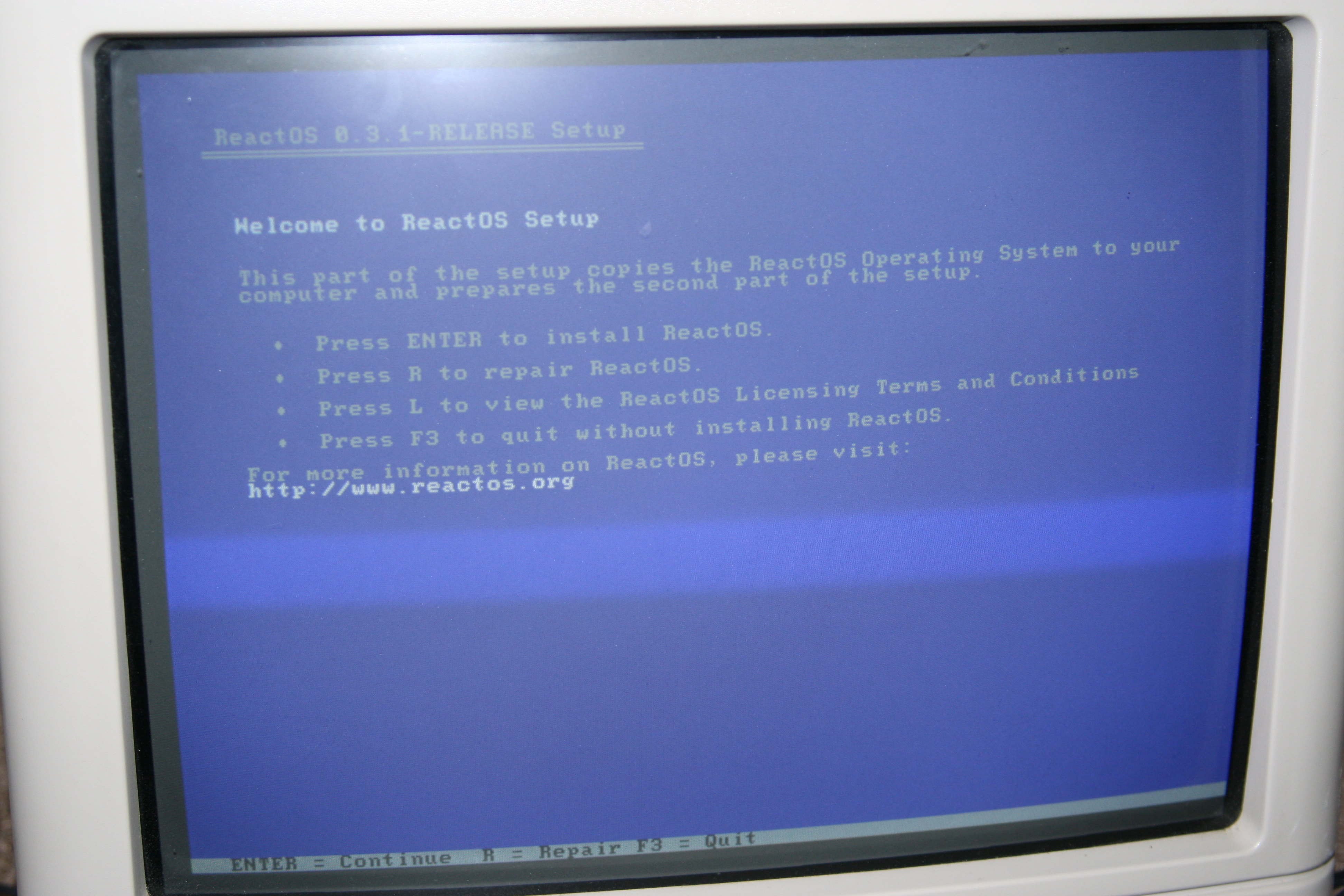
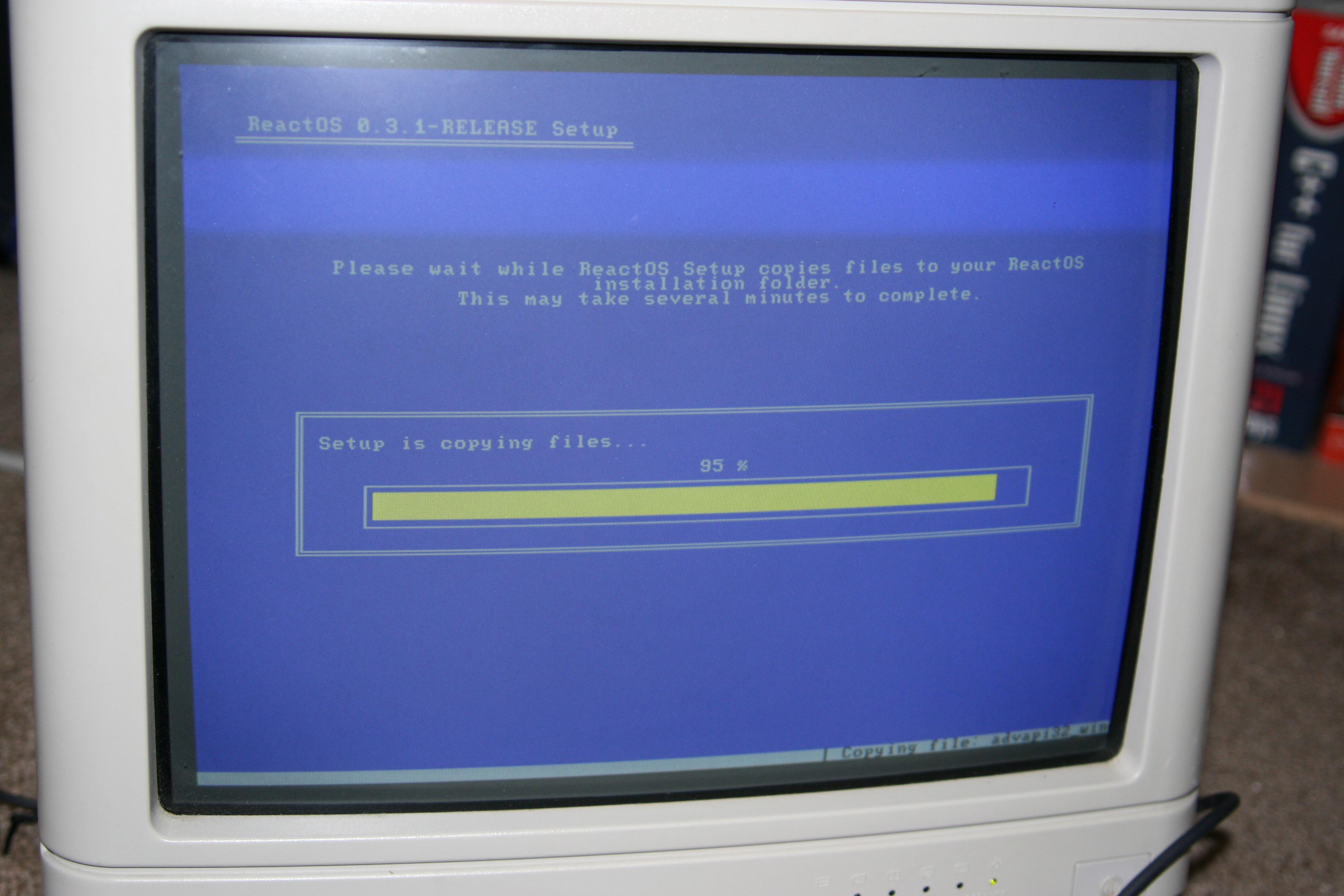
However, that computer already had Linux on it and, for some reason, ReactOS did not know how to use the partitions correctly. So instead of getting to test how ReactOS was going on real hardware (vs the VMWare images I’ve tried so far), all I got was a GRUB error. When I get more time I’ll have to fsck it to wipe the whole drive and then try again. Hopefully by then they’ll be into the 0.4 series. (I don’t see myself having much free time anytime soon)
Hello Bill
Just tested and, yes, for the small, uncomplicated Hello World program it works just fine on Windows XP. I just had to install .NET. (It took about 10 minutes….I don’t know why)
Monkey Business
After reading Linux Format Magazine (LXF) Issue #91, in which they used Mono to code a GTK gui, I decided to take up C# programming. I will follow along with the tutorials and gain another programming language under my belt. Today I started with LXF #87 and completed my C# “hello world” program. The syntax is interesting - it’s a cross between C and Java. Of course, that makes sense as it lists those as its predecessors. Python (and Perl) is still much quicker for short programs, but for complex ones C# seems to be the way to go. At least, a lot of neat Gnome projects have been created with C# such as Banshee, Tomboy, and f-spot.
Hidden Features
Veterans of Linux installs from the early days may chuckle at my new discovery, but I’ve only been installing Linux since the graphical days of Anaconda and Fedora Core 1. (But first some background info) I was recently installing Xubuntu on my father-in-law’s computer. He wanted me to install a new Windows Media Player version, but I needed to upgrade to Windows Service Pack 2. The Kami at M$ were not smiling upon his household because this hosed the computer.
Dual Screen Gnome with Compiz finally works "correctly"
I’ve done a few updates in the past week or so and I’ve been in fvwm-crystal, so I don’t know which update fixed things, but Gnome finally handles Dual Screen Compiz correctly. Previously, if I maximized a window, it would maximize across both monitors! I NEVER want that kind of behaviour because my screens are not only a few inches apart, but they also have a 2-3 inch frame between viewable areas. I really didn’t like that discontinuity in my viewing area, so I would always have to manually size up the windows. This behaviour was only occuring in Gnome; KDE, fluxbox, fvwm-crystal and other WMs were correctly handling the maximize command. So I’m glad that Gnome will no longer be a source of frustration for me.