Thoughts on Positive AI Usage
EricMesa
- 5 minutes read - 958 wordsThere’s a lot about the current AI situation to be upset about.
- Data center buildup is insane and, certainly at a higher rate than we will need when the market settles. While they’re running now they’re causing issues with loud noise, electricity usage, and water usage. The ones that are extra when all is said and done might end up being blights on the towns without any other potential uses.
- The AI stock trade is sucking lots of capital out of the market that could be going to other uses. And when the bubble bursts it is almost certainly plunging the US (and maybe world) into a recession
- Some companies are forcing AI usage on employees (see Doctorow’s Reverse Centaur book) and/or firing people without understanding how much work can actually be automated.
- Many (all?) of the AI models were trained on copyrighted material without compensation and now they want to charge for access to the models
- There’s lots of creative work (slop) like books and songs that are flooding the market with non-human created work.
However, I don’t think there’s any way this toothpaste is going to be put back in the tube. Even if we somehow got all of the world to agree that we would not do anymore AI training (getting rid of lots of the bad stuff above related to data centers, the environment, and the stock market), AI at its current level is here to stay. After all, there is not crazy innovation going on in the word processor space or spreadsheet space, but they didn’t go away.
At the same time, research (which is, admittedly very new) seems to be indicating that we need to be careful with how AI affects our brains. The Economist talks about the danger of cognitive surrender and the MIT Media Lab points out some of the issues using AI to write essays.
This medical paper finds negatives like:
A study by Bai, Liu, and Su examines AI-based tools like ChatGPT and their impact on memory retention. While AI enhances personalized learning, excessive reliance may reduce cognitive engagement and long-term retention (Bai et al., 2023). Similarly, Akgun and Toker studied 73 information science undergraduates at a Pennsylvania university. Participants were divided into two groups: one engaged in pretesting before using AI, while the control group used AI directly. Results showed that pretesting improved retention and engagement, but prolonged AI exposure led to memory decline (Akgun and Toker, 2024). These findings suggest AI enhances accessibility but may weaken retention if overused. To maximize benefits, AI should support rather than replace human-driven learning strategies.
and mixed results like:
AI tutoring has increased student performance on standardized tests. Stanford research found a 15% increase in scores for students using AI platforms compared to traditional instruction (Top 6 AI Tools Revolutionizing Math Tutoring Techniques, n.d.).1 However, concerns remain about the building of conceptual understanding. Research by the University of Pennsylvania with Turkish high school students found that those using ChatGPT to practice performed worse on exams when compared with those who did not use the technology. While AI-assisted students answered correctly 48% more problems, their score on a concept understanding test was 17% lower (Barshay, 2024). These findings show that AI enhances procedural skill but does not necessarily create deeper learning. For optimal benefit, AI-based tutoring must be integrated with pedagogy that encourages critical thinking and active engagement.
I know that with programming it also has both pluses and minuses. It can help programmers who are stuck on a bug. Or it can provide frontend code for backend developers. But it can also make some people feel like they’re not being creative anymore.
In light of all of this, I wanted to think of some potential good uses of AI that, hopefully, don’t result in the negative aspects like cognitive reduction or creative reduction. They can even be run locally, obviating data center issues. Here are some ideas I thought of:
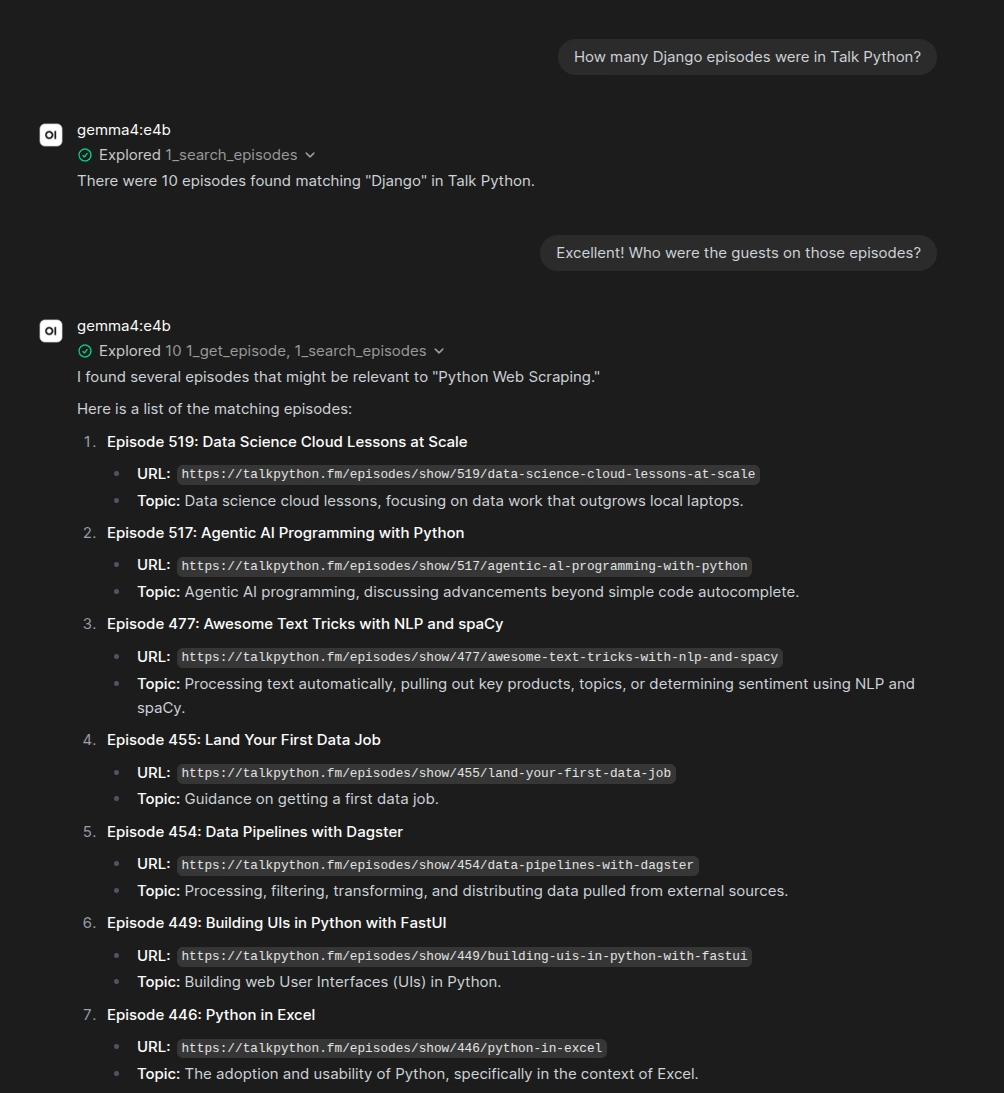
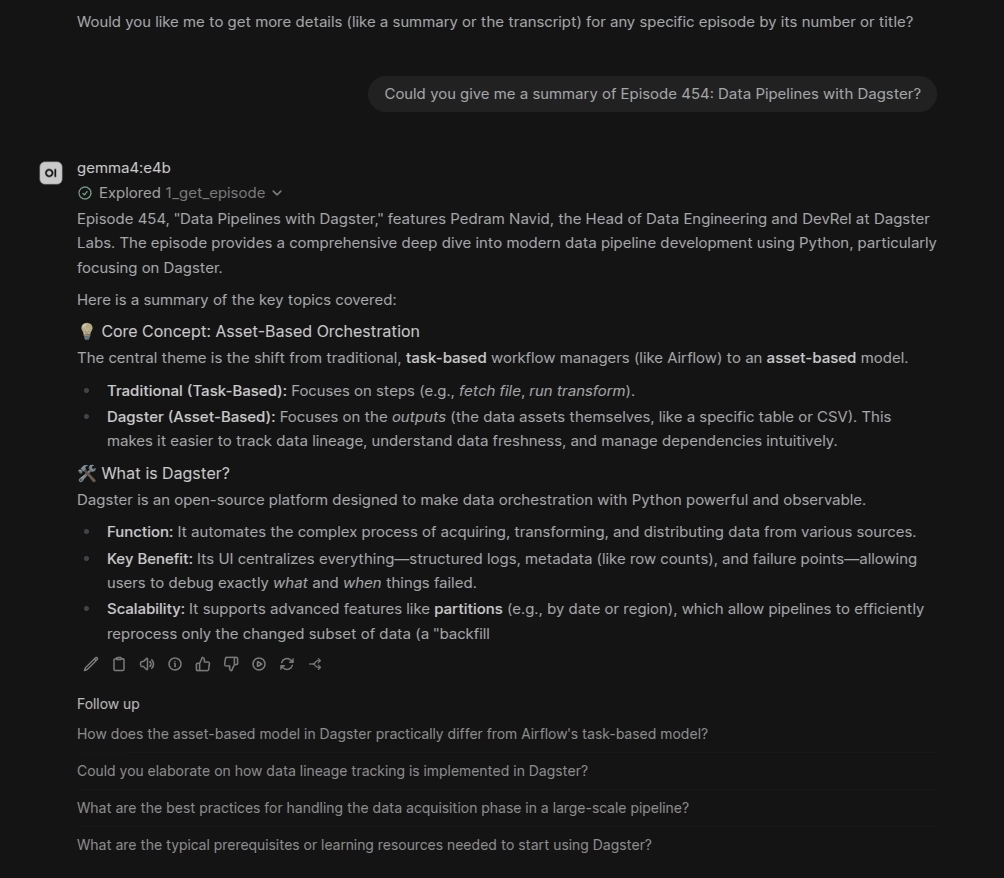
- Using an MCP server to allow for searching with natural language. I remember when Google first came out and to get the best search results, one had to use all sorts of tricks to get Google to include certain websites or exclude certain language. While it has gotten better at allowing for natural language searches, it could still use some work. Here’s an example of using the MCP connected to Talk Python to be able to get information that might be a little more annoying if doing it manually or with Google:
- Creating quiz questions from your notes. It’s a great way to learn and prepare for tests. This way you’re still learning - not offloading the thinking to the AI. And it keeps you from only asking yourself easy questions.
- Loading your dissertation and the questions you’ve anticipated from the board and asking for other questions. Can help you be more prepared and force you to consider your paper from different angles
- If you have a vast database or wiki of characters, locations, etc for your book series, movie, or TTRPG - you could load it into the knowledge base of the AI and then ask questions about it. I’ve used these tools before and put all this data in, but then it’s still a pain to try and put the data together to understand character relationships or country treaties or whatever. Brandon Sanderson has at least one person (if not more) whose job it is to maintain such a database and check his books against it to make sure he’s not accidentally creating a retcon. Sanderson can afford to do this, but a smaller author can’t. This could be a way to help them, while still keeping all of the authorship of the novel, movie, etc completely human.